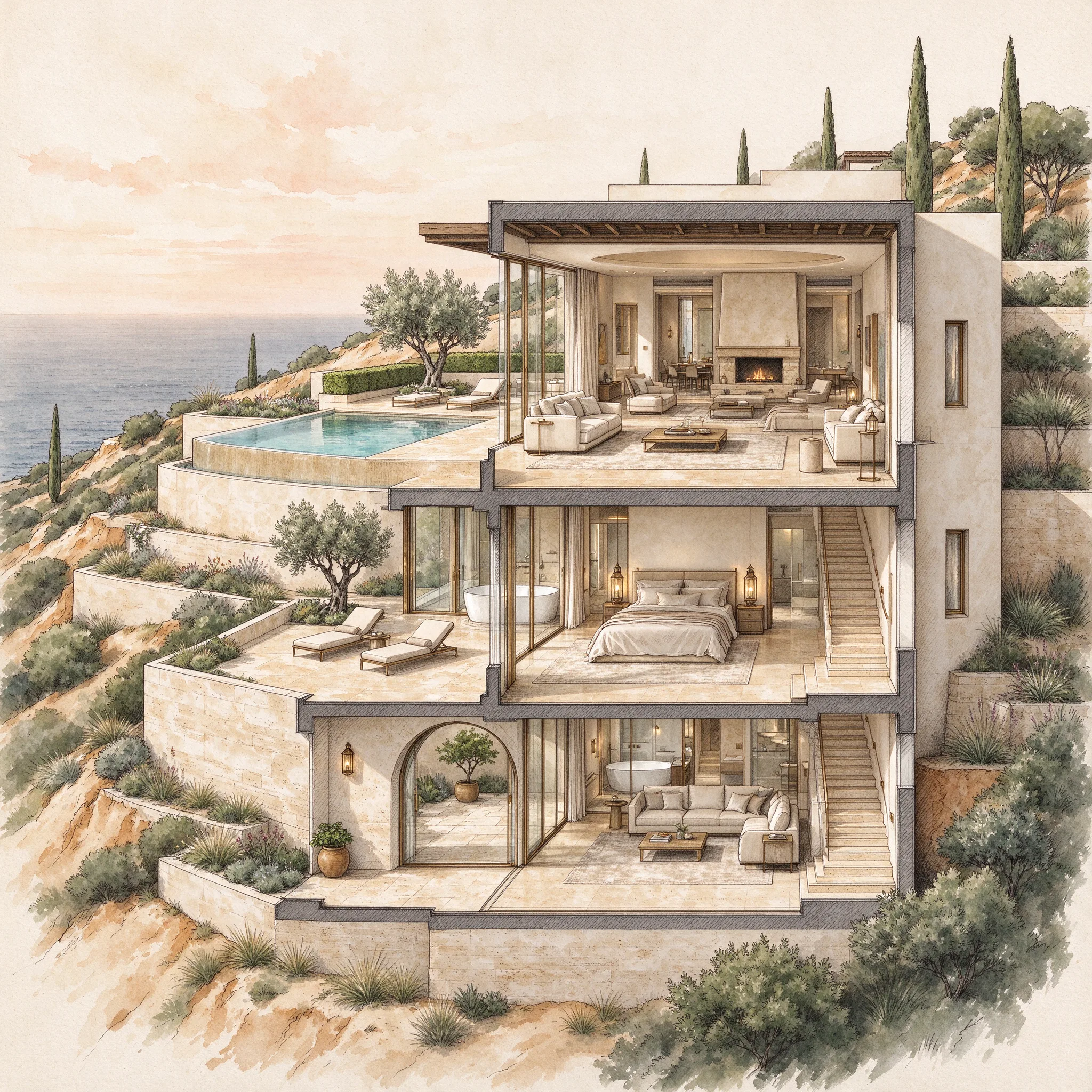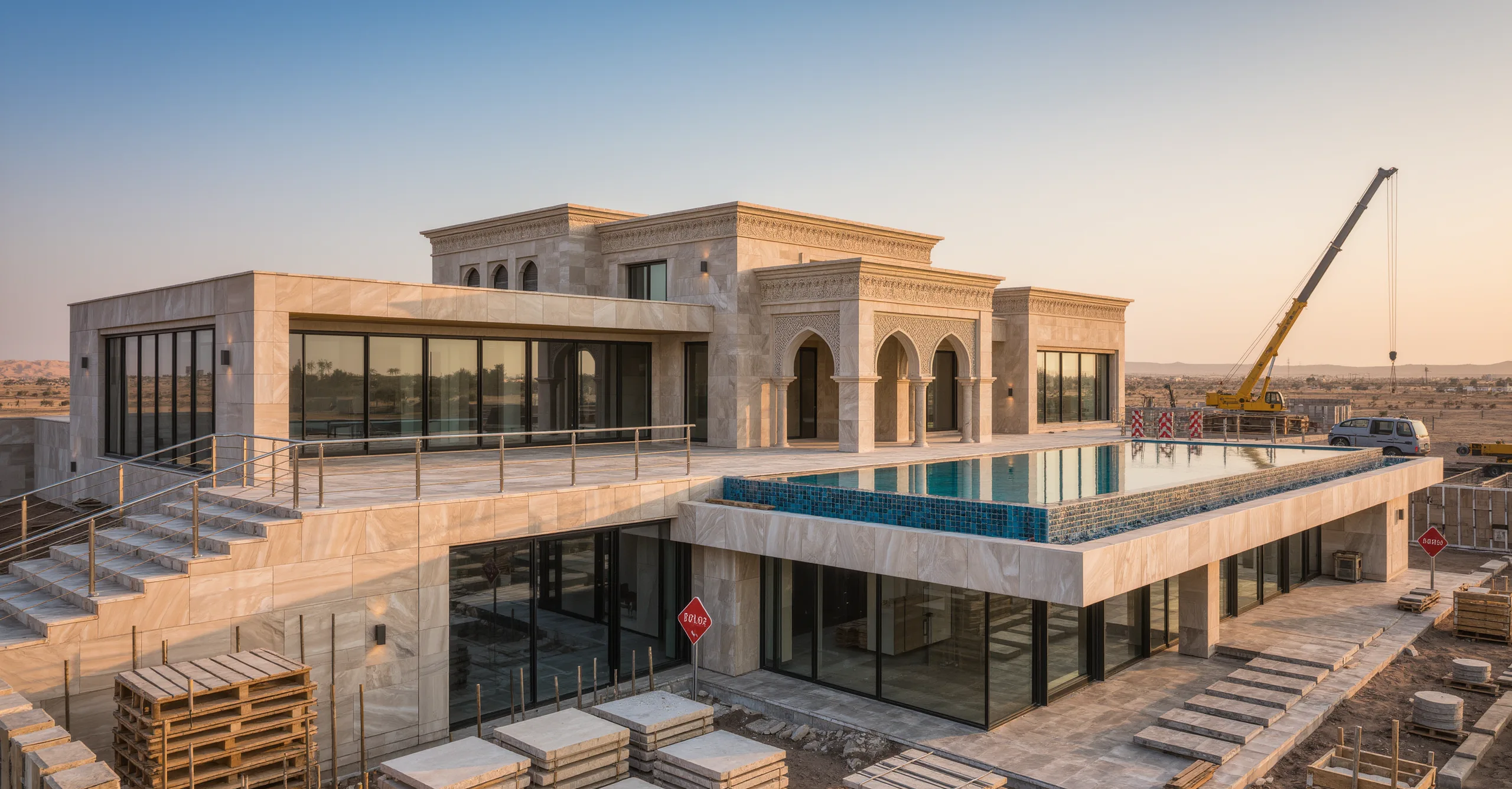
Renovating an asset only makes sense if the work improves how it is used, keeps its costs under control or strengthens its market position. From the technical assessment to the rental strategy, value-enhancement decisions are ranked by their expected impact.
Owning property in Marrakech is a significant opportunity for long-term wealth. Yet the value of a villa, an apartment, a building or a commercial unit does not depend on location alone. Its condition, positioning, management and the quality of its fit-out all have a direct bearing on how attractive it is to the market.
A value-enhancement strategy for property in Marrakech improves the quality of an asset, optimises its income and strengthens its resale potential. To be effective, it has to rest on an accurate analysis of the property and on actions suited to how it is used.
Start with a full assessment of the property
Before committing to works or changing the rental strategy, the property's condition needs to be assessed objectively. This first review identifies its strengths and weaknesses and the improvements most likely to create genuine value.
The assessment can cover:
- The general condition of the building;
- The quality of the technical installations;
- The layout of the spaces;
- Energy performance;
- The level of specification and finishes;
- Maintenance or renovation needs;
- The property's position in the local market;
- The income it generates and its operating costs.
This review avoids unnecessary spending and focuses investment on the actions with the strongest potential return.
Align the property with what the Marrakech market expects
A property asset has to meet the needs of its target occupiers. A villa intended for high-end rentals will not be enhanced in the same way as a family apartment, a rental building or a professional space.
In Marrakech, occupiers and investors generally look for spaces that are comfortable, light-filled, functional and easy to maintain. The quality of outdoor areas, equipment, security and finishes also plays an important part in how a property is perceived.
Before defining a strategy, it is therefore worth identifying the future user precisely:
- Owner-occupier;
- Long-term tenant;
- Short-term rental guest;
- Business occupier;
- Long-term investor;
- Buyer looking for a high-end property.
This understanding helps select the improvements that genuinely matter and avoids a positioning that drifts away from demand.
Renovate to improve comfort and appeal
Renovation is one of the main levers for adding value. It can range from a simple refresh to a complete transformation of the property.
The most effective works are those that improve the use, the appearance and the durability of the building at the same time. They may include:
- Upgrading electrical and plumbing installations;
- Modernising the kitchen and bathrooms;
- Improving insulation;
- Replacing floor and wall finishes;
- Restoring façades;
- Making better use of outdoor spaces;
- Renovating common areas;
- Creating new storage.
Well-planned renovation makes a property more attractive while reducing future maintenance costs. It can also make letting or selling easier by creating a better first impression.
Rethink the interior architecture and layout
The way spaces are organised directly affects the perceived value of a property. Poor circulation, dark rooms or badly used volumes can hold back its potential, even in a good location.
Interior architecture in Marrakech makes it possible to rethink volumes for today's ways of living. It can improve flow, bring in more natural light and strengthen the relationship between indoor and outdoor spaces.
Adding value can involve:
- Opening up certain rooms;
- Creating additional suites;
- Improving circulation;
- Converting an unused space;
- Designing bespoke furniture;
- Improving the lighting;
- Bringing materials and colours into harmony.
The aim is not to add more decorative features, but to create a coherent, functional interior that suits the property's positioning.
Take care of the outdoor spaces
In Marrakech, terraces, gardens, patios and pools are central to the property experience. Well-designed outdoor spaces can considerably strengthen the appeal of a villa, a residence or a property intended for rental.
Adding value may include landscaping, creating shaded areas, installing outdoor lighting or renovating a pool. Planting choices should take account of the climate and of maintenance needs.
A pleasant outdoor setting improves everyday comfort, sets the property apart in the market and can support a higher price or rent.
Optimise rental performance
Enhancing an asset is not only a matter of works. Better management can also improve its return.
Analysing rents, occupancy, operating costs and vacant periods highlights what can be improved. Depending on the type of property, it may make sense to revisit its rental positioning, its services or its marketing strategy.
Structured property management helps to:
- Reduce periods without a tenant;
- Preserve the condition of the property;
- Improve occupier satisfaction;
- Control spending;
- Anticipate maintenance needs;
- Secure rental income;
- Protect long-term asset value.
Property management in Marrakech is particularly useful for owners who live elsewhere or hold several properties.
Keep operating costs under control
A property that generates high income can lose performance when its costs are not properly controlled. Recurring expenses therefore need to be analysed to identify savings.
This may concern energy consumption, maintenance contracts, equipment upkeep, management fees or repeated technical call-outs.
Some improvements require upfront investment but reduce costs over the long term. Replacing old equipment, improving insulation or installing more efficient systems can strengthen the overall return of the asset.
Define a long-term value strategy
Property value is built over time. An effective strategy has to address immediate needs, but also how the property and its surroundings will evolve.
It is therefore useful to plan works, improvements and spending across several levels of priority. Urgent interventions preserve the asset, while medium-term actions can improve its positioning and performance.
This planning gives better financial visibility and limits decisions taken in a hurry.
An integrated approach to unlock each asset's potential
MBR Signature supports owners and investors in analysing, renovating, managing and enhancing their properties in Marrakech.
Our approach combines technical expertise, interior architecture, property management and investment strategy. Each recommendation is shaped by the condition of the asset, its market, how it is operated and its owner's objectives.